7 November
The date of 7 November is the eve of Dorian Gray's thirty-second birthday, a night he would often remember afterwards. It is the night on which he murders Basil Hallward, the painter whose portrait has become the visible record of his soul's decay, and thus marks the moment when Dorian's life of hidden corruption crosses irrevocably into the realm of violent crime.
The Night of the Murder
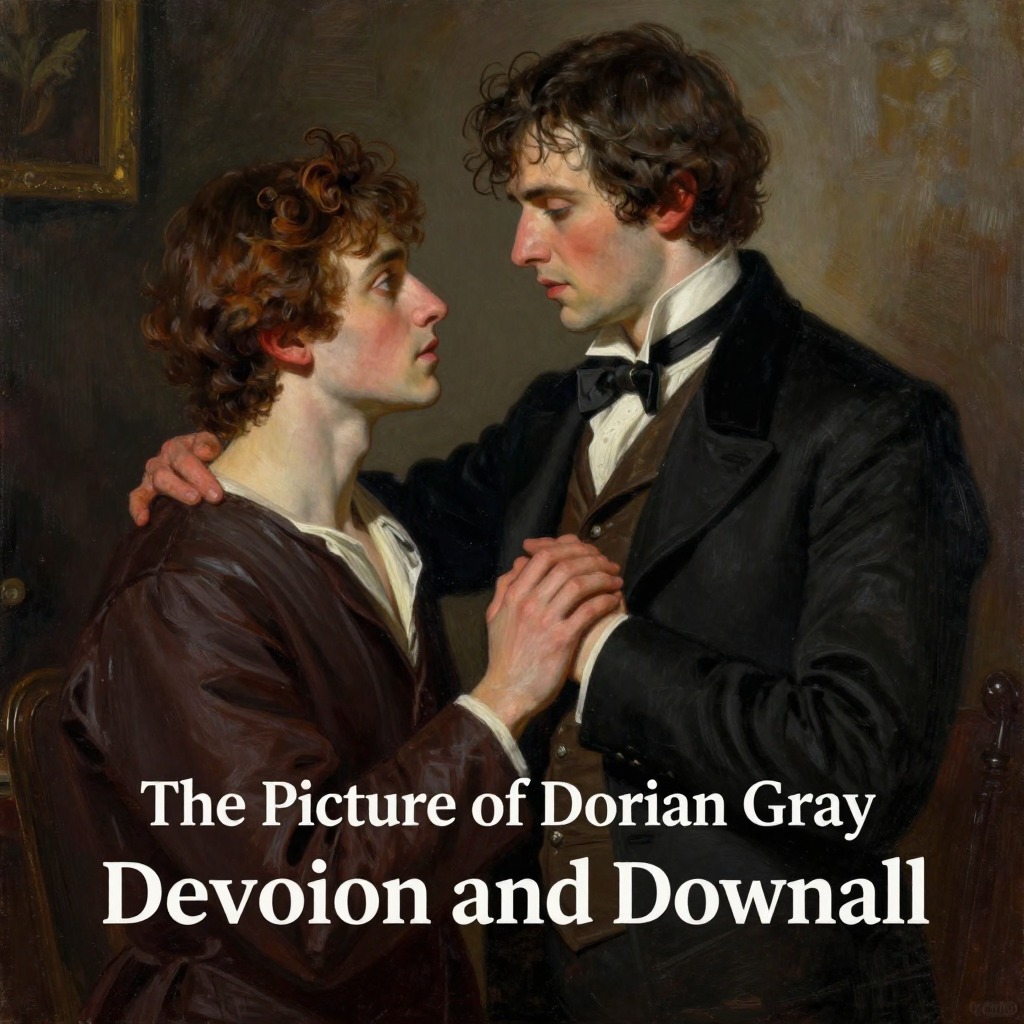
On the foggy evening of 7 November, Dorian is walking home about eleven o'clock from Lord Henry Wotton's house, wrapped in heavy furs against the cold. At the corner of Grosvenor Square and South Audley Street, a man passes him in the mist—Basil Hallward, carrying a Gladstone bag and wearing a gray ulster, on his way to catch the midnight train to Paris. Hallward recognizes Dorian, stops him, and insists on coming inside for a moment to speak seriously. Once in the library, Hallward confronts Dorian with the dreadful rumors circulating about him in London: that he has corrupted young men, that the Duke of Berwick leaves a club room when Dorian enters, that Lord Kent's only son has been ruined, that Lady Gwendolen's name has become a byword. Hallward declares that he cannot believe these things when he sees Dorian's pure, innocent face, but he demands an answer. Dorian, pale with fear at the mention of seeing his soul, responds with a bitter laugh and seizes a lamp. "You shall see it yourself, to-night!" he cries, and leads Hallward up to the locked room where the portrait hangs.
The Revelation and the Killing
In the dusty, mildewed room at the top of the house, Dorian tears the curtain from the portrait. Hallward sees the hideous thing on the canvas—his own brushwork, his own frame, but the face of a satyr, leering with cruelty and corruption. He recognizes it as his own picture, yet the transformation is impossible. "I don't believe it is my picture," he protests. Dorian replies, "It is the face of my soul." Hallward, horrified, urges Dorian to pray, to repent: "The prayer of your pride has been answered. The prayer of your repentance will be answered also." But Dorian, looking at the accursed thing, feels an uncontrollable hatred for the man who painted it. He sees a knife on top of a painted chest—a knife he had brought up days before to cut a piece of cord and forgotten to take away. He moves slowly, seizes it, and stabs Hallward behind the ear, crushing his head down on the table and stabbing again and again. The outstretched arms shoot up convulsively three times, then are still. Dorian waits, listening to the drip of blood on the threadbare carpet.
The Aftermath and the Cover-Up
After the murder, Dorian feels strangely calm. He opens the window and steps onto the balcony, watching a policeman go his rounds and a woman stagger by in a ragged shawl. He returns to the library, hides Hallward's bag and coat in a secret press, and then stages his own return home by ringing the bell and waking his valet, Francis, at five minutes past two. The next morning, he writes to Alan Campbell, a former friend and a brilliant chemist, summoning him on a pretext of life and death. When Campbell arrives and refuses to help, Dorian blackmails him with a letter that forces compliance. Campbell, under duress, goes to the locked room with a chest of chemicals and an electric battery; after five hours, he returns pale but calm, having destroyed every trace of the body. The murder of Basil Hallward on the night of 7 November thus becomes the central, irreversible act that seals Dorian's fate, leading eventually to Alan Campbell's suicide and to Dorian's own destruction when he finally stabs the portrait.
The Date's Narrative Significance
The date of 7 November is the eve of Dorian's thirty-second birthday, a milestone that underscores the contrast between his unchanging youthful appearance and the aging, corrupted face on the canvas. It is also the date that Scotland Yard and the French police later fix upon in their investigation of Hallward's disappearance: the man in the gray ulster who left Victoria Station by the midnight train on 7 November was presumed to be Hallward, but he never arrived in Paris. The date thus becomes a pivot around which the novel's final act turns—the point at which Dorian's secret life of sin becomes a life of murder, and the point from which the unraveling of his carefully constructed double existence begins.